

In 2017, Tung Lin Kok Yuen was officially designated as a Declared Monument by the Hong Kong SAR Government. The monastary was designed by architect Mr. Fung Tsun and supervised by Venerable Ai Ting to ensure that its architectural details reflect Buddhist principles. Mr. Fung, who studied architecture in the United States and Europe, completed his master’s degree in architectural drafting in London in 1933 before returning to Hong Kong to pursue design work.
Poised on the mountainside, facing south while embracing the north, Tung Lin Kok Yuen melds with the natural contours of the land. Though the terrain limited traditional courtyards along the central axis, Mr. Fung preserved classical Chinese Buddhist hallmarks. The architectural sequence ascends with measured reverence, from the Mountain Gate to the Front Hall, the Grand Buddha Hall, and culminates in the Pagoda. The triangular plot imparts a distinctive arrowhead form to the structure, resembling a seafaring vessel embarking upon a vast water. This design embodies “Ship of Prajñā”, an enduring symbol of guidance, carrying sentient beings toward the far shore of enlightenment. In its form and meaning, the monastery reflects the Buddhist spirit of compassion and the universal salvation of sentient beings.
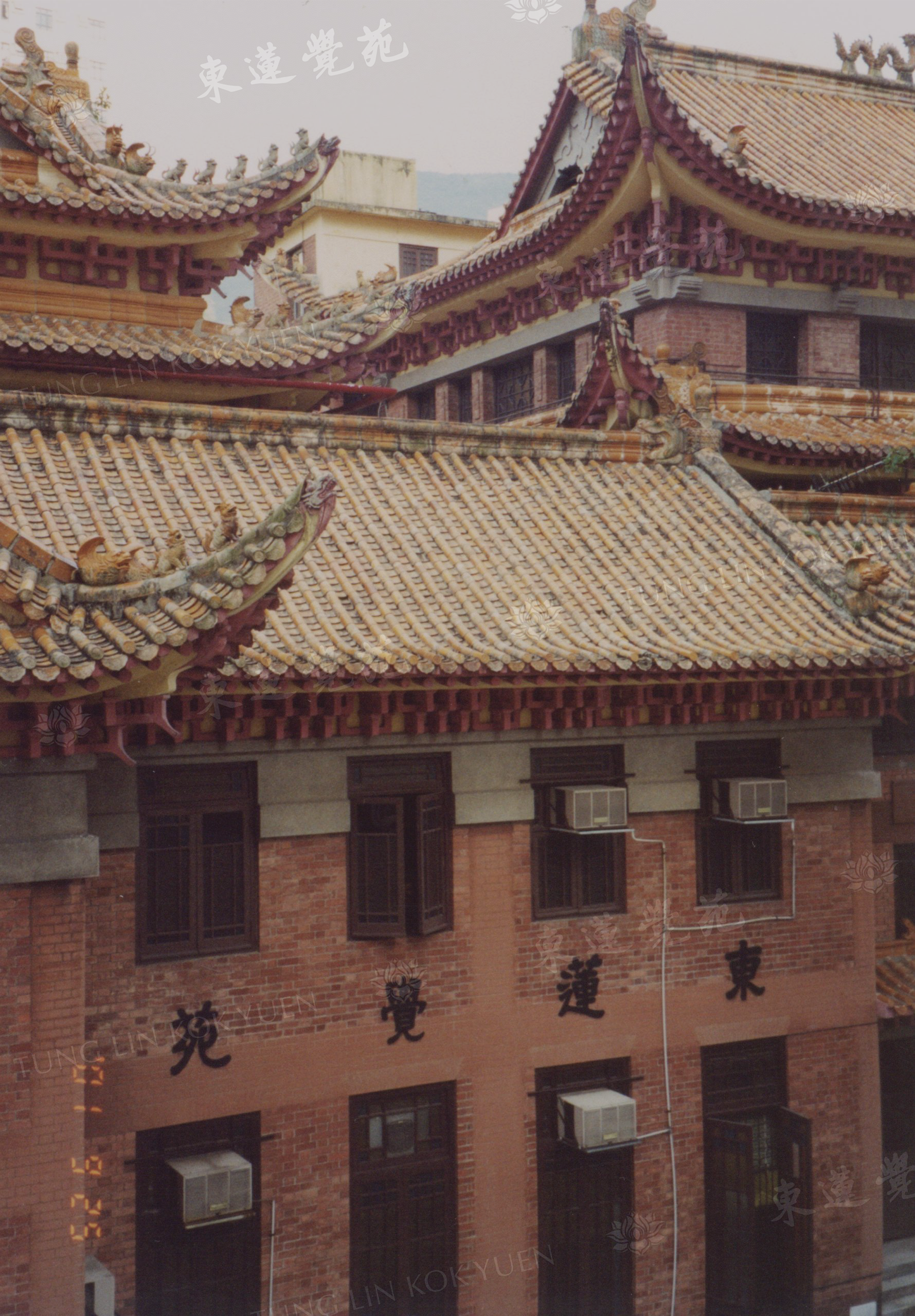
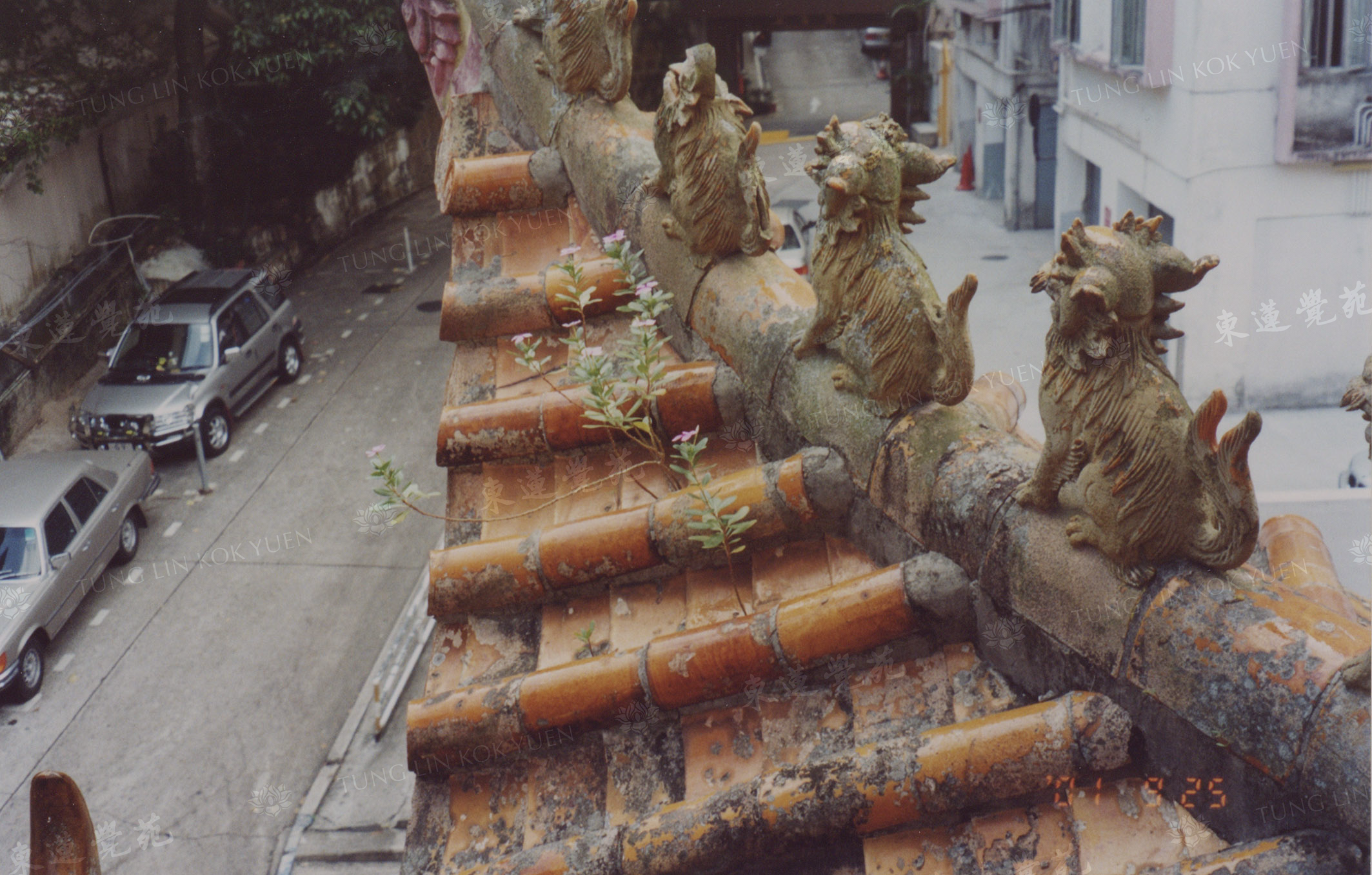
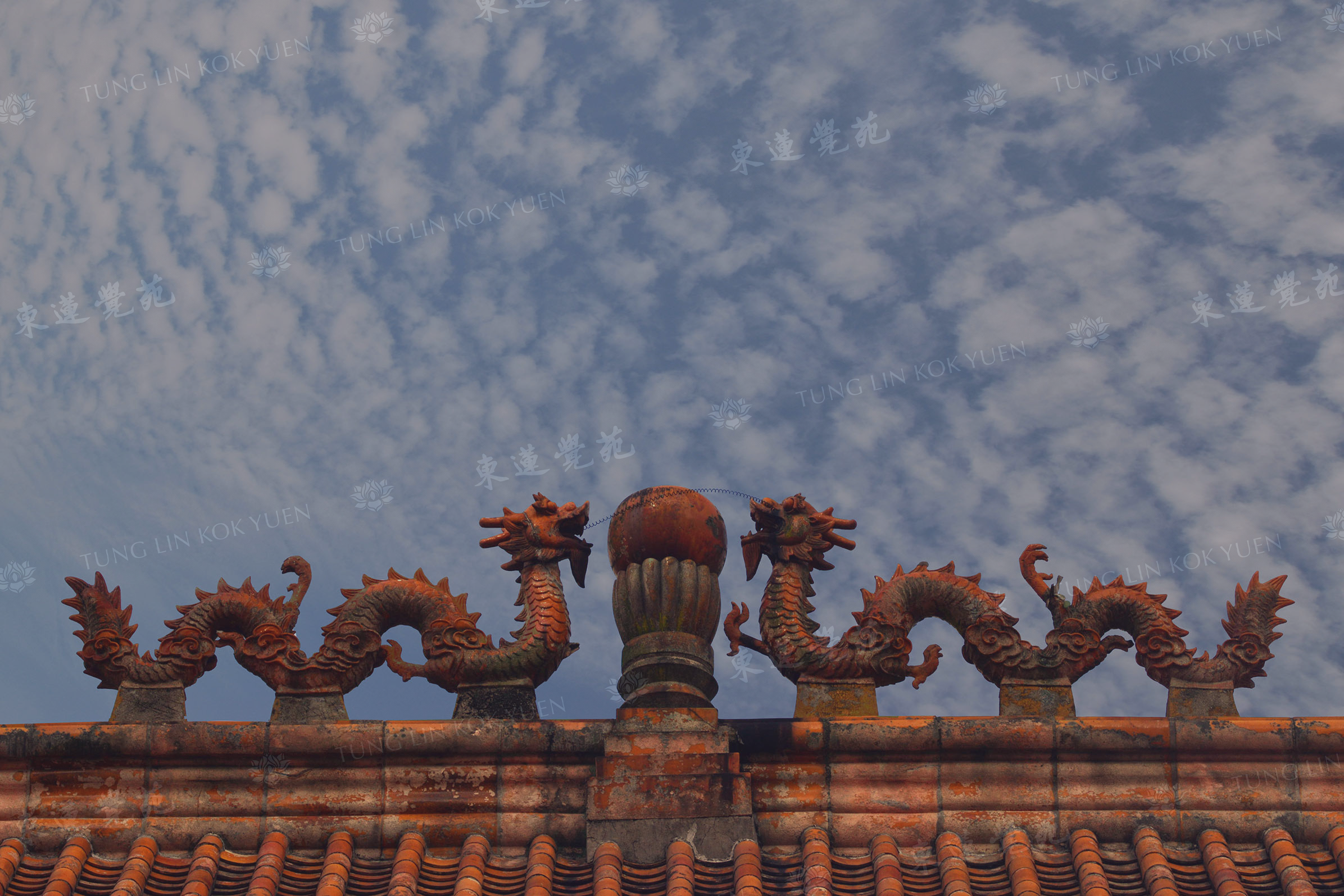
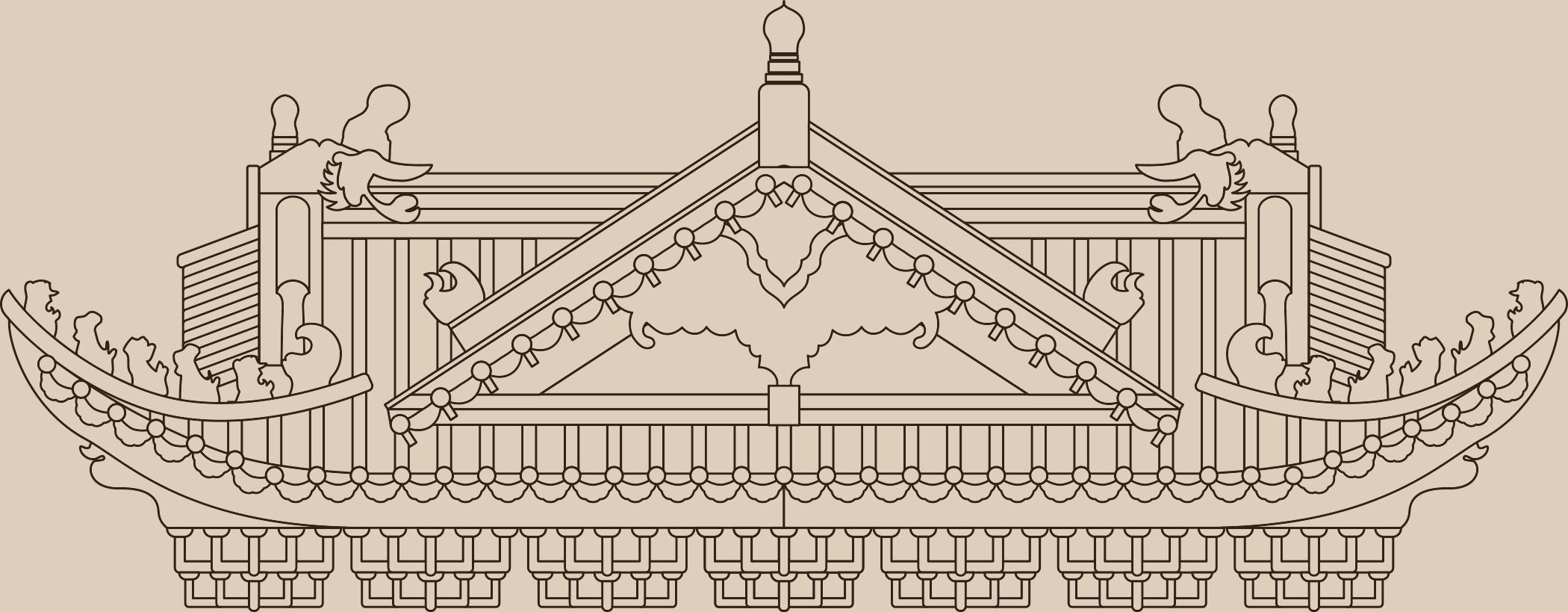
Mr. Fung seamlessly blended Chinese and Western architectural elements, embodying Eclecticism in Architecture of the 1930s. The roof features traditional hip-and-gable structures, double-eaved roofs, and cross-ridge designs. Decorative motifs, such as clay sculptures of “Twin Dragons Fight for a Pearl”, chiwen, and hanging beasts, adorn the ridges and eaves. Under the roof, ornamental dougong brackets complement the elegance of painted glass windows, Italian terra cotta tiles, and reinforced concrete construction, creating a majestic and harmonious design.
The two spaces beside the Skanda Hall were originally used as classrooms for the Po Kok Free School. Over time, they were repurposed into guest hall and activity spaces. Today, they serve as exhibition halls, showcasing the adaptive reuse of the space to meet changing societal needs.
In 2015, TLKY initiated a long-term conservation project, guided by the principle of “Restoration to Original Form” and the belief that preserving a sacred site is integral to preserving Buddhist teachings. The project covers both physical structures and intangible cultural heritage, including hiring conservation consultants, establishing Archives and Engineering Departments, formulating archival management and building preservation plans, and conducting historical research and architectural assessments. During the restoration, parts of the site were opened for guided tours and sharing sessions, allowing the public to experience the beauty and spiritual significance of Buddhist architecture.
Beyond the preservation of its sacred architecture, TLKY extends its care beyond architecture to the preservation of historical artifacts and archival records. In 2016, it established the Archives Department with the mission of “Documenting Heritage, Sustaining Purpose.” This dedicated endeavor safeguards the monastery’s legacy, protecting cultural treasures while deepening understanding of Buddhism’s growth in Hong Kong. Through this devoted work, the wisdom of the Dharma is preserved, and its light continues to guide future generations.
The library of TLKY houses a vast collection of Buddhist texts, a testament to its historic role as a center for the dissemination of sacred works. These cherished volumes reflect the monastery’s steadfast dedication to spreading the Dharma through the noble tradition of publishing. Artifacts and archives thus serve as important vessels carrying the history of the Yuen and of Buddhism in Hong Kong. The careful work of organization and preservation stands as a vital way in which the Yuen sustains and nurtures Buddhist heritage.
In 2021, TLKY launched the “Oral History Project,” an initiative devoted to preserving the monastery’s rich heritage and deepening understanding of Hong Kong’s Buddhist history. Through training, interviews, and documentation, the project gathers diverse perspectives to create a valuable and lasting historical database.
In honor of TLKY’s 90th anniversary, we humbly unveil the Archives Department website, offering insight into TLKY’s history, its treasured archives, curated exhibitions, and inspiring interviews. Through this platform, we seek to nurture a deeper reverence for the rich heritage and enduring cultural legacy of this hallowed site.