“To enter the sea of unconditioned Dharma Board the ship of Prajñā Wisdom.”
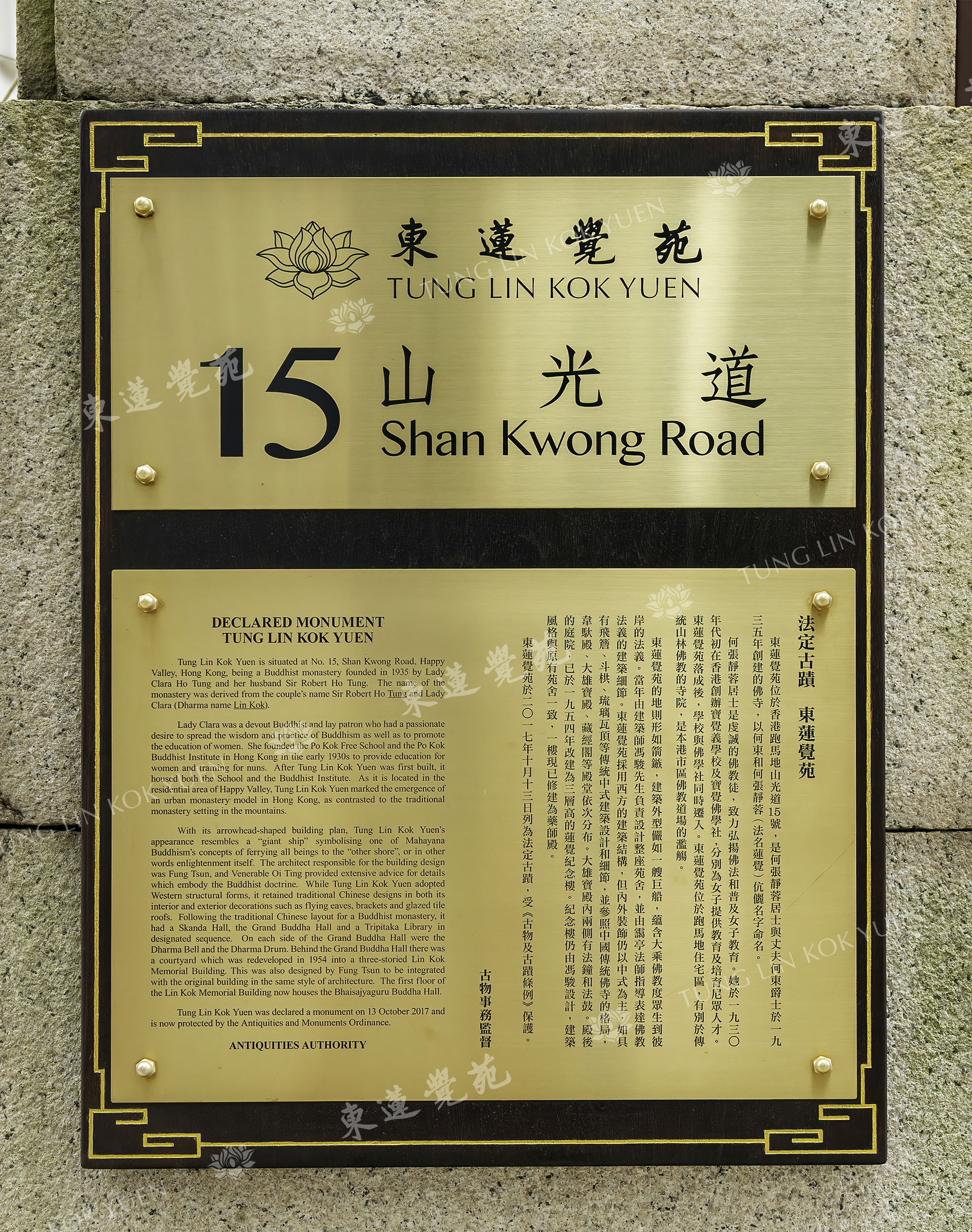
Under the Antiquities and Monuments Ordinance, the Tung Lin Kok Yuen was designated a declared monument in October 2017.
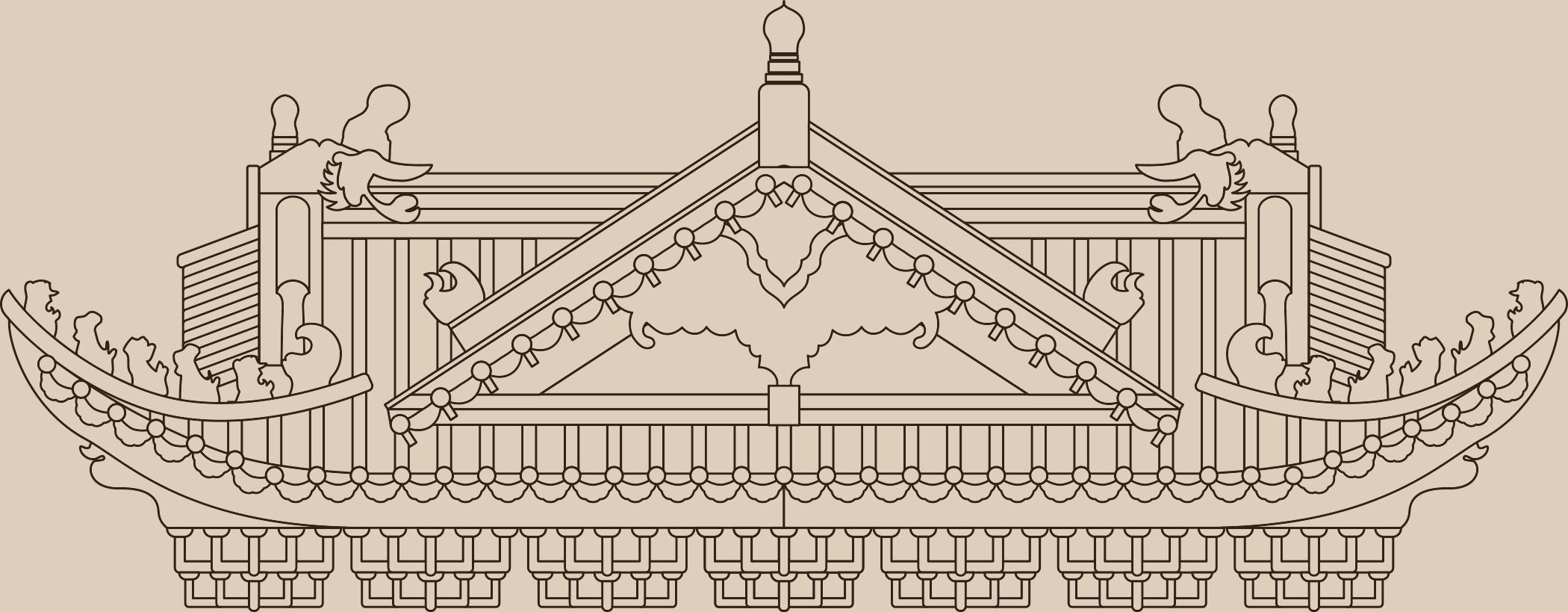
The yuen’s exterior encapsulates the profound essence of Buddhist philosophy, harmonizing the finest traditions of Eastern and Western architectural craftsmanship. Its design envisions a “Ship of Prajñā,” an elegant metaphor for the spiritual journey, guiding practitioners through the suffering of Saṃsāra toward the transcendent shore of enlightenment.
Before entering this “Ship of Prajñā,” take a moment to observe TLKY’s setting. Perched on a hillside within a lively residential area, its location was a conscious choice. When founded in the 1930s, Happy Valley was still a newly developed neighbourhood. Breaking from the tradition of building Buddhist temples in rural areas, this temple’s urban location was a pioneering decision that helped shape the development of urban Buddhism in Hong Kong.
The architectural design of the sanctuary further reflects its distinctive identity. In contrast to the prevalent architectural style of 1930s Hong Kong, which typically featured red walls with green or blue tiles, TLKY stands apart with its Qing Dynasty palace-inspired design. The combination of a yellow glazed tile roof and Western classical-style red brick creates a harmonious and visually striking composition, embodying the sanctuary’s fusion of Buddhist principles and cross-cultural influences. This seamless integration elevates it to a site of profound spiritual significance and a historic landmark of architectural heritage.
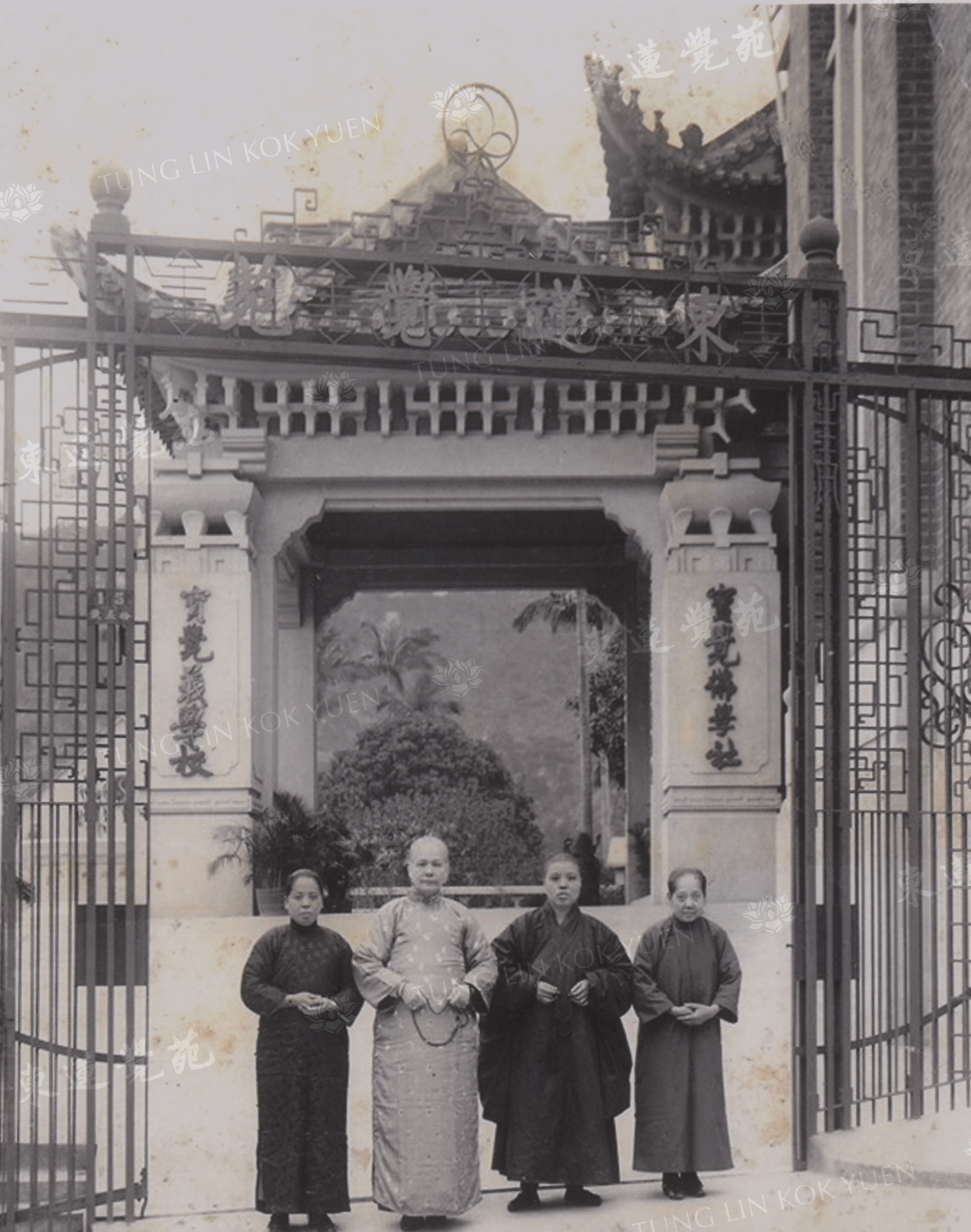
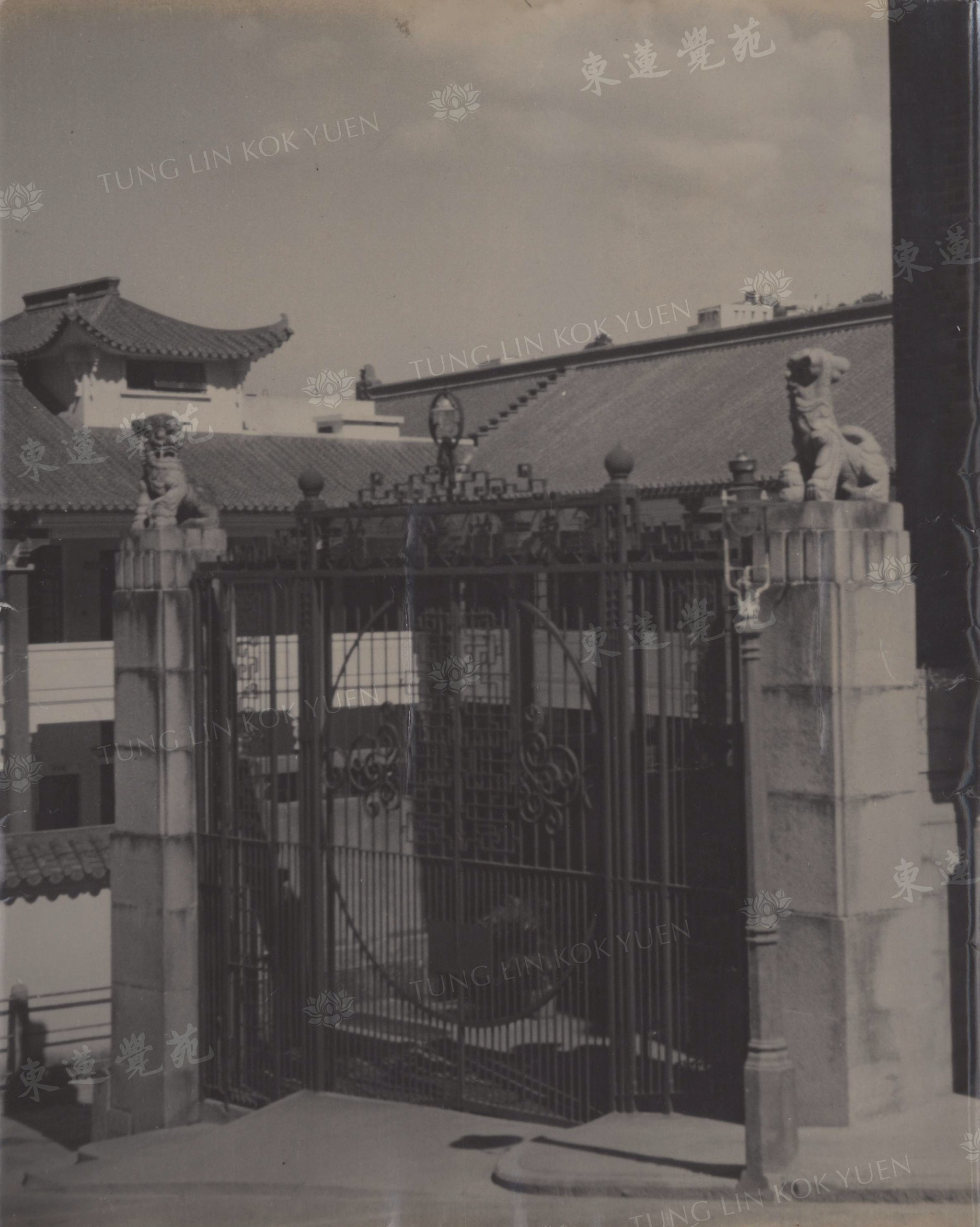
In the 1930s, Tung Lin Kok Yuen’s founder, Lady Clara Ho Tung (second from the left), and the second abbot, Madam Lam Ling Chun (first from the left), were photographed with venerable and devotee in front of the main gate. Nearly a century later, the iron gate and entrance remain remarkably preserved, standing as a testament to the sanctuary’s enduring legacy.
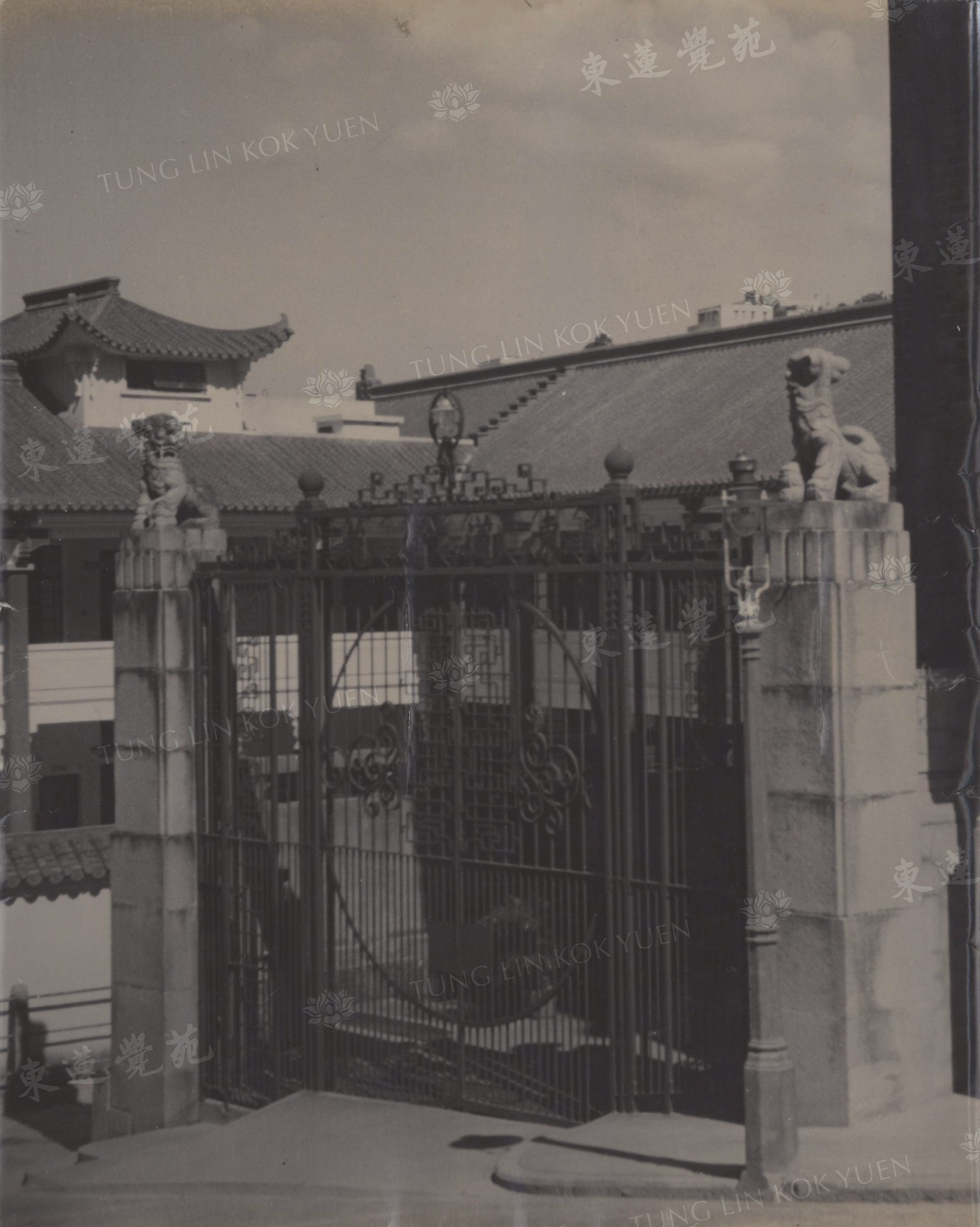
The horizontal sliding iron gate marks the main entrance to Tung Lin Kok Yuen. When closed, it features a central circular motif adorned with traditional Chinese patterns: the shou (壽) pattern symbolizing longevity and blessings, and the hui (回) pattern, a maze-like design representing continuity and eternity.
By 2020, nearly 85 years after its main building was completed, the exterior concrete showed signs of deterioration. To ensure pedestrian safety, Tung Lin Kok Yuen funded scaffolding and repairs to restore the plasterwork and bricks, embodying the Buddhist principle of “benefiting oneself while benefiting others”.