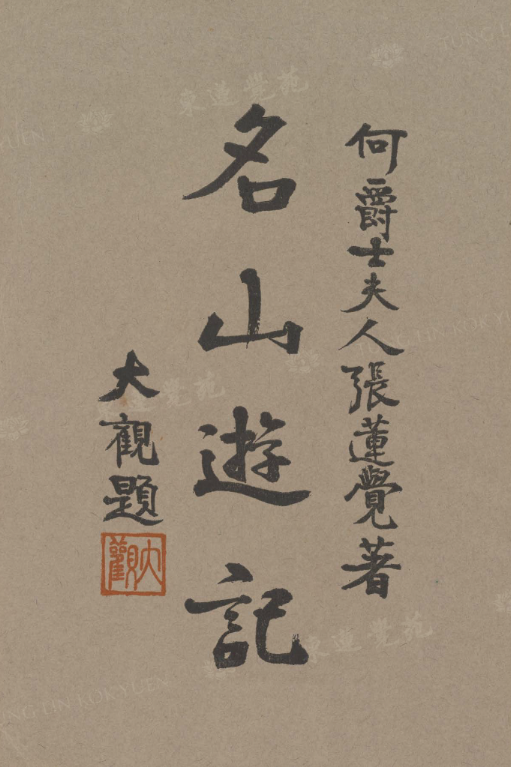
The sole surviving written work by Lady Clara Ho Tung is considered one of the most important documents for studying her life and the development of Buddhism in Hong Kong. Published in 1934, the book chronicles her observations and reflections during visits to famous Buddhist sites, while also detailing the inspiration and circumstances behind the founding of Tung Lin Kok Yuen. Dedicated to the propagation of Buddhism in Hong Kong, Lady Clara devoted her life to the welfare of all beings. Her profound vision and tireless efforts laid a solid foundation for the flourishing of Buddhism in the region, embodying the aspirations of a true bodhisattva practitioner.
The Certificate of Incorporation of Tung Lin Kok Yuen
In the mid-20th century, Tung Lin Kok Yuen adopted a modern charter, pioneering contemporary management of Hong Kong Buddhist monasteries. In 1937, Lady Clara Ho Tung appointed Madam Lam Ling Chun as her successor to lead Tung Lin Kok Yuen and the Po Kok School. She established a Board of Directors, including members from the Buddhist community, academia, and the Ho’s family, to form the “Permanent Board of Directors” and support governance. This model became a benchmark for Hong Kong Buddhist organizations, inspiring post-war examples like the Hong Kong Buddhist Association and Po Lin Monastery to adopt similar board structures for collective decision-making and large-scale development.
Lady Clara Ho Tung also donated all her personal assets and life savings, as detailed in her will, to establish Tung Lin Kok Yuen’s “Permanent Fund” for the creation of a modern and enduring public institution dedicated to education and Buddhist teachings. She emphasized acquiring reliable properties or investments under the Board’s stewardship to ensure sustainable growth. This long-term vision laid the foundation for the organisation’s financial stability, with the fund evolving into a significant pillar of support for its continued development.
After the Chinese Temples Ordinance in 1928, Buddhist organizations in Hong Kong recognised the importance of formal registration. Political tensions following the outbreak of the Chinese Civil War in 1949 further prompted the colonial government to review Chinese religious groups’ activities. In response, the Board of Tung Lin Kok Yuen registered the institution as a limited liability organization under the Companies Ordinance (1932). This legal recognition not only provided protection under the law but also ensured Tung Lin Kok Yuen’s sustainable development, securing its future vitality.